
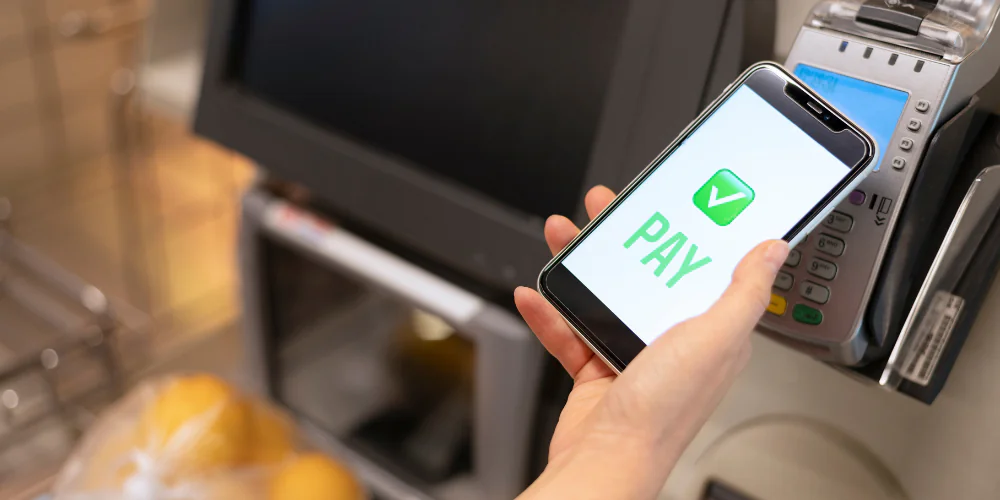
Let’s go automatic
You’re in the shop, ready to pay and the shortest queue is the automatic checkout, so you take a chance. You watch other customers testing the waters, looking for the barcode on a packet of toilet paper, looking for the code on the bananas they forgot to weigh or waiting for a clerk to come up to approve a card charge. In the end, is it faster? does a “human” have to be there anyway?
Self-pay machines have already become widespread in the US, at retailers such as Walmart, Target and CVS on the premise that they help customers get out of the shop faster and free up employees for other tasks, or allow shops to reduce staff. However, the customer experience has been less than ideal.
“Everyone hates them,” says Abhinai Srivastava, CEO of Mashgin, which is trying to capitalise on this sometimes frustrating experience to sell its own line of innovative self-checkout machines. “The idea is good, but the implementation has not been so good.”
Mashgin, based in Palo Alto, California, has spent the last eight years harnessing technological advances to create a state-of-the-art self-payment machine that does not require customers to scan items. Instead, the counter system uses artificial intelligence to automatically identify and register items. This allows customers to pay in as little as 10 seconds, eight times faster than a normal self-payment machine. “Most of that time is spent searching for the credit card,” explains Srivastava. Thanks to this increased efficiency, a retailer can purchase just one of his machines instead of two or three of the traditional ones.
The machines are gaining popularity. Circle K is installing them in 7,000 of its shops over the next three years. This is in addition to its pilot programme of using the technology in 500 Circle K. Mashgin has also installed its machines in hundreds of other locations, including convenience stores like Ampm and Delek in Texas, as well as airports, corporate cafeterias and stadiums like Chicago’s Wrigley Field and arenas like New York’s Madison Square Garden.
It’s part of an attempt to do away with checkout lines (and, presumably, many of the human cashiers who staff them), as so-called smart checkout technology is expected to process some $400 billion in transactions between now and 2025, according to Juniper Research.
“Steal the purchase”
There is another concept even more innovative than automatic checkouts. Far from conventional supermarkets, online shopping giant Amazon has created a new shopping concept based on self-service and Just Walk Out technology. In other words, when you arrive at the shop you are automatically associated with your Amazon account, you can take whatever you want from the shelves and you don’t have to go to the checkout, because there are no checkouts or employees to charge you. Where’s the trick? A system of artificial vision, sensors and automatic learning that detects what we have taken when we leave the shop and uploads it to our Amazon account. Of course, to buy in an Amazon Go it is essential to be a user of the platform.
To develop such a recognition system, the company has installed dozens of cameras mounted on the ceiling of the store, every centimetre of which is covered from different angles, so there are no blind spots. These cameras are complemented by depth detection cameras and weight sensors on the shelves that recognise the exact weight of each product. All the information is processed in a central unit, but oddly enough there is no facial recognition as such, the system detects your entrance and depending on the appearance of your clothes and where you move it associates you with your account, but not by your face.
The interest in all this is whether you can cheat the system and get a free sandwich or not, it’s not that easy. To get in, you have to get in by holding your phone up to the security passes, so as soon as you enter you’re already identified. You can pick up a drink and put it straight into your bag, in a disguised way if you want, but from the moment you take it off the shelf Amazon knows about it. And if somehow someone manages to cover up a camera (or several), the system is able to continue working, as Amazon told TechCrunch, they have found that the system continues to work even if several cameras stop working.
We’ll see if the concept of supermarket logistics surprises us in the not too distant future.